
Exosome serums for face compared by source, delivery and label claims, with what to expect on fine lines and hydration. Read before you buy.
Exosome Serums for Face: What Actually Works
Nov 14, 2026

Last Updated: November 14, 2026
Quick Summary
Exosome serums are topical products containing exosomes, often alongside hydrating and barrier-supporting ingredients. Realistic benefits include hydration, a smoother feel, and gradual improvement in the look of fine lines with consistent use. Most evidence so far comes from lab and early research, so expect modest results rather than dramatic change.
- Exosome serums most realistically offer hydration, smoother skin feel, and gradual fine-line improvement.
- Plant-derived and human-derived exosomes differ in sourcing and regulatory questions, so check the label's stated origin.
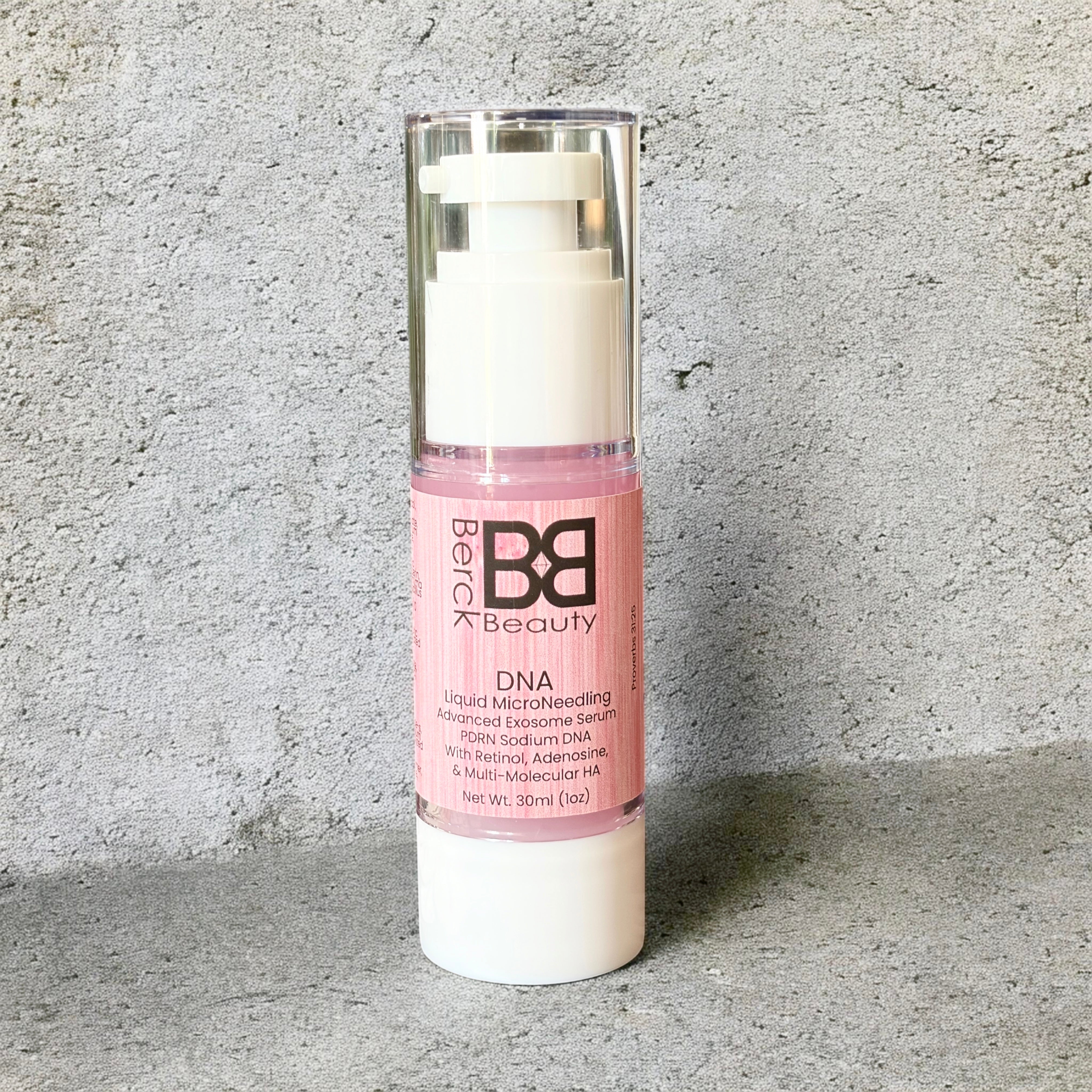
- Micro-channel serums like BB DNA Liquid MicroNeedling Advanced Exosome Serum cost $26.00 for 1 oz.
- Patch test for two nights and start retinol-containing serums two to three nights a week.
- Treat vague claims such as clinically proven without a named study as unverified marketing.
Which serum fits your skin?Berck offers restorative skincare with clear ingredient lists and straightforward daily routines.
Sign Up For Email Notifications
Table of Contents
- What Exosome Serums Are and What They Can Realistically Do
- Plant-Derived vs. Human-Derived Exosomes: How the Sources Differ
- How Microneedling-Style Serums Deliver Exosomes Into the Skin
- 5 Best Exosome Serums for Face Wrinkles, Compared
- What Dermatologists Say About Exosome Claims and Evidence
- How to Read Labels and Verify Exosome Product Claims
- Choosing the Right Exosome Serum for Your Routine and Next Step
- Frequently Asked Questions
This guide separates what these products can realistically do from what the packaging promises. If you are a woman in your forties, fifties or sixties looking at a serum that promises smoother lines and a brighter complexion, this is the place to start.
Exosomes are tiny, membrane-bound particles that cells release to pass signals to one another. In skincare, brands use them as a way of packaging messages that encourage skin to repair itself.
What Exosome Serums Are and What They Can Realistically Do
An exosome serum is a topical product that contains exosomes, often alongside hydrating and barrier-supporting ingredients. The most realistic benefits are hydration, a smoother feel to the skin, and gradual improvement in the look of fine lines as part of a consistent routine. Dramatic changes in deep forehead lines or sun spots are not something a topical serum can promise on its own, so be cautious of any claim that suggests otherwise.
Plant-Derived vs. Human-Derived Exosomes: How the Sources Differ
Exosomes in skincare come from different origins. Plant-derived exosomes are typically easier to source and produce at scale, and many brands use them for that reason. Human-derived exosomes raise more regulatory and sourcing questions, so the label should tell you where the material comes from and how it was processed. Neither source is automatically better. What matters is transparency about origin, purity and the testing behind the product.
How Microneedling-Style Serums Deliver Exosomes Into the Skin
Some serums use micro-scale particles or other mechanisms to create temporary channels in the outer layer of skin, which can help other ingredients penetrate. Berck's BB DNA Liquid MicroNeedling Advanced Exosome Serum uses a hydrolyzed sponge that creates these micro-channels, paired with cellular communicators and skin-identical nutrients. The product is intended for external use only, so avoid the eyes and do not apply it to broken or irritated skin.
5 Best Exosome Serums for Face Wrinkles, Compared
A fair comparison of exosome serums starts with four questions: where the exosomes come from, how the formula is delivered into the skin, what supporting ingredients carry the rest of the load, and what you actually pay per ounce. A useful comparison also looks at cost per ounce and how long a bottle lasts at the recommended dose. Below is the framework we use, followed by our pick and the categories worth comparing against it.
How we compare exosome serums
- Source disclosure. Does the label name the exosome source (plant, lactobacillus, milk, human-derived, or other) or only say "exosomes"? A named source is a minimum bar.
- Delivery method. Some formulas rely on ordinary topical absorption. Others use micro-channel or microneedling-style delivery to help ingredients past the outer layer. Delivery changes what a label claim can mean.
- Supporting ingredients. Hydrators such as hyaluronic acid, barrier ingredients such as ectoin, and actives such as retinol or peptides do most of the visible work in most formulas. Check whether the supporting cast matches your skin type.
Our pick: BB DNA Liquid MicroNeedling Advanced Exosome Serum
Price: $26.00 for a 1 oz bottle.
A serum that combines several active ingredients in one routine step. It pairs a hydrolyzed sponge that creates temporary micro-channels with Sodium DNA (PDRN), lactobacillus and milk exosomes, and retinol. The formula combines multi-layer hydration with cellular communicators like retinol and peptides to visibly smooth lines and boost elasticity, and is enhanced with nourishing lipids to strengthen the skin's barrier.
- Pros: Multi-layer hydration, a clear list of active ingredients, a named delivery mechanism, and straightforward evening use.
- Cons: Retinol can cause dryness or irritation in sensitive skin, so start with a patch test and begin two to three nights a week.
- Best for: Women who want a single evening serum covering hydration and fine lines.
BB DNA Liquid MicroNeedling Advanced Exosome Serum lists the full ingredient breakdown and directions on its own product page.
The categories worth comparing against our pick
Rather than rank products we have not tested, we compare by category so you can slot any serum into the right box before you buy.
- Plant-derived exosome serums. Usually the easiest to source at scale and the most common on shelves. Compare them on concentration disclosure and supporting hydrators, since plant-derived formulas often lean on humectants for their visible effect.
- Human-derived exosome serums. These raise more sourcing and regulatory questions, so the label should state origin and processing. Treat any human-derived claim without that disclosure as unverified.
- Micro-channel or microneedling-style serums. These create temporary channels in the outer layer to help ingredients penetrate. Our pick sits in this category. Compare them on how the channels are created and whether the brand warns against use on broken or irritated skin.
Watch out: a serum labeled "exosome" can contain a very small amount of exosome material and rely almost entirely on its hydrators and actives for results. If the brand will not say how much is in the bottle, assume the supporting ingredients are doing the work and judge the formula on those.
Cost per ounce, worked through
At $26.00 for 1 oz, our pick lands at $26.00 per ounce. To compare any other serum, divide its price by its ounce size. Then factor in dose: if a brand recommends two pumps twice a day, a 1 oz bottle may last a month or less, which changes the real monthly cost.
Here is how the five categories compare on the main factors, based on the framework discussed above.
| Category | Best for | Key difference |
|---|---|---|
| Plant-derived exosome serums | Easiest to source at scale | Often lean on humectants for visible effect |
| Human-derived exosome serums | Shoppers who want origin disclosed | Raise more sourcing and regulatory questions |
| Micro-channel or microneedling-style serums | Helping ingredients penetrate the outer layer | Channels are temporary; avoid broken or irritated skin |
| Retinol-plus-exosome serums | Renewal-focused routines | Retinol can dry or irritate sensitive skin |
| Hydration-first exosome serums | Sensitive or compromised skin | Built on hyaluronic acid and ectoin |
What Dermatologists Say About Exosome Claims and Evidence
Knowing which kind a brand is leaning on tells you how much weight to give its claims.
- In-vitro evidence. Cells in a lab dish respond to exosome material. This shows a mechanism is plausible. It does not show that a topical serum reaches the right layer of skin in a person or produces a visible change.
- Ingredient-level evidence. A specific ingredient in the formula, such as hyaluronic acid, ectoin, or retinol, has been studied on its own. That evidence supports the ingredient, not the exosome claim, and many formulas would perform similarly without any exosome material.
- Clinical outcomes in people. Controlled studies in real users, with a stated duration and a measured endpoint, are the strongest support. These are the least common in the exosome category, and brands rarely publish them.
A common pattern is a product page that cites lab findings and then describes visible results as if the two were the same. They are not. When a brand says "clinically proven," ask which of the three categories the proof falls into and whether a named study is cited.
Topical products are generally understood to support hydration and barrier health, which is where most realistic exosome serum benefits land. For sun-damaged skin, a separate, deeper guide on repair may be more useful, and you can read How to Reverse Sun Damage on Your Face Safely for that.
What the evidence does and does not establish
- Establishes: that exosome-like materials can carry signals between cells in laboratory settings, and that well-formulated serums with hydrators and barrier ingredients can improve the feel and appearance of skin.
- Does not establish: that a topical serum reverses aging, rebuilds collagen, or produces results comparable to in-office procedures.
- Still open: how much exosome material actually penetrates intact skin from a topical formula, how much is needed for a visible effect, and whether plant-derived and human-derived materials behave the same way in people.
Safety, irritation, and skin type
Exosome serums are generally well tolerated, but supporting ingredients can sometimes cause irritation. Retinol formulas can dry and irritate sensitive skin. Acids and exfoliants layered on top can compound that. If your skin is sensitive, acne-prone, or compromised by a recent procedure, patch test on the inner forearm for two nights before using a new serum on your face, and introduce it two to three nights a week before building up.
How to verify a product's claims and label
Use this checklist before you buy:
- Source named? The label should say where the exosome material comes from, not just that it contains exosomes.
- Evidence type stated? Look for a named study or a stated test type. "Clinically proven" alone is not enough.
- Concentration disclosed? If the brand will not say how much exosome material is in the bottle, assume the supporting ingredients are doing the work.
- Full ingredient list available? Check for hydrators, barrier ingredients, and actives that match your skin type.
- Directions and cautions present? A label that tells you how to use the product and what to avoid is a good sign.
- Realistic claims? Language about hydration, smoothness, and the look of fine lines is credible. Language about reversing aging or rebuilding skin is not.
Watch out: a brand that cites a study but will not link to it, or that describes lab results as if they were user results, is the clearest signal to slow down before you spend money.
How to Read Labels and Verify Exosome Product Claims
Check the ingredient list for the exosome source, the concentration if it is disclosed, and any supporting ingredients such as hyaluronic acid or ectoin. Look for patch-test guidance, usage directions and a clear caution section. Be skeptical of vague terms like "clinically proven" without a named study. A label that tells you how to use the product and what to avoid is a good sign.
Choosing the Right Exosome Serum for Your Routine and Next Step
Start with your main concern. If it is hydration and general smoothness, a simpler serum may be enough. If you want to address fine lines and are comfortable with a retinol-containing formula, a multi-active serum may suit you better. If you are also treating dark spots, Effective Skincare for Dark Spots covers a complementary routine.
Berck builds its skincare around restorative, ingredient-aware formulas. Sign up for email notifications to hear about new releases and routine guidance from our team.
Frequently Asked Questions
Do exosome serums actually work?
The honest answer is that the evidence is still limited. Most published exosome research has been done in laboratory and animal settings, not in large human trials of topical serums sold to consumers. Products can improve hydration and make skin feel smoother in the short term, and many formulas include well-studied ingredients such as hyaluronic acid or retinol that have their own track record. Set realistic expectations, judge results over several weeks, and be skeptical of any product promising dramatic change in days.
Is an exosome serum safe to use at home?
For most adults, a topical exosome serum used as directed is considered low risk. Apply a small amount to a clean face, avoid the eyes, and do a patch test on the jawline or inner arm before full use. Stop using the product if you notice redness, stinging or swelling. If you are pregnant, are being treated for a skin condition, or have very sensitive skin, check with your doctor or dermatologist before starting.
Can you use exosome serum with retinol?
Many people use both, but they are strongest when introduced one at a time. Start the exosome serum for two weeks, then add retinol every other night if your skin tolerates it. Apply the exosome serum after toner and before your moisturizer, and keep retinol on alternate evenings if irritation appears. Pausing the retinol for a few days is a simple fix if your skin feels tight or stings.
How often should you use an exosome serum?
Most labels direct use once or twice daily, and the evening is a common choice because the skin's repair activity is often higher overnight. Follow the directions on your specific product, since application amounts differ. Consistency matters more than frequency: using the serum daily for at least four weeks gives you a fair picture of how your skin responds.
